BUTTERFLY-FRIENDLY WILDFLOWERS FROM LADYBURN NATIVE PLANT NURSERY
  • Home
    • Home
    • Find the Foodplant
  • BUTTERFLIES
    • BUTTERFLIES
    • THE BROWNS
    • WHITES AND YELLOWS
    • COPPERS & HAIRSTREAKS
    • CATERPILLAR FOODPLANTS M
    • VANESSIDS
    • PAINTED LADY
    • THE BLUES
    • FRITILLARIES
    • DAY-FLYING MOTHS
  • CATERPILLAR FOODPLANTS
    • BIRD'S-FOOT TREFOIL
    • SHEEP'S SORREL
    • ROCK ROSE
    • THISTLES
    • GARLIC MUSTARD
    • KIDNEY VETCH
    • NETTLES
    • VIOLETS
    • NATIVE GRASSES
    • TREES
    • OVERWINTERING
  • NECTAR PLANTS
    • Nectar Plants
    • High Nectar Yielders
    • Existing Nectar Plants
    • Nectar Native or Exotic
    • Aphid Honeydew
    • Moths
  • CONTACT
    • Contact
  • BLOG
    • Blog
  • Plants for sale
  • LADYBURN NURSERY HOME PAGE
  • Home
    • Home
    • Find the Foodplant
  • BUTTERFLIES
    • BUTTERFLIES
    • THE BROWNS
    • WHITES AND YELLOWS
    • COPPERS & HAIRSTREAKS
    • CATERPILLAR FOODPLANTS M
    • VANESSIDS
    • PAINTED LADY
    • THE BLUES
    • FRITILLARIES
    • DAY-FLYING MOTHS
  • CATERPILLAR FOODPLANTS
    • BIRD'S-FOOT TREFOIL
    • SHEEP'S SORREL
    • ROCK ROSE
    • THISTLES
    • GARLIC MUSTARD
    • KIDNEY VETCH
    • NETTLES
    • VIOLETS
    • NATIVE GRASSES
    • TREES
    • OVERWINTERING
  • NECTAR PLANTS
    • Nectar Plants
    • High Nectar Yielders
    • Existing Nectar Plants
    • Nectar Native or Exotic
    • Aphid Honeydew
    • Moths
  • CONTACT
    • Contact
  • BLOG
    • Blog
  • Plants for sale
  • LADYBURN NURSERY HOME PAGE

Blues

.
For the Blues, Kidney Vetch, Bird's-foot Trefoil and Holly are a Few of the Choices
Picture

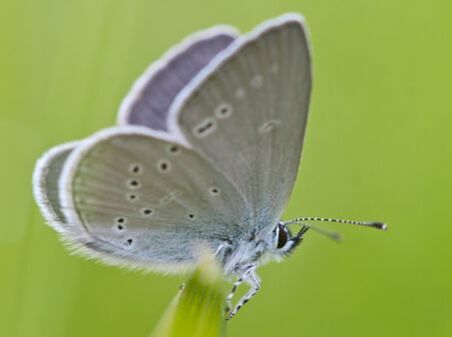
 SMALL BLUE
Cupido minimus

The Small Blue is Britain's smallest butterfly. The female lays her eggs singly on the flower or the buds of KIDNEY VETCH, and her offspring eats the flower or the seed.
​
At the end of the year the caterpillar hibernates in the undergrowth near the food plant, so it's important not to plough it up in autumn.

The Small Blue is found in small scattered colonies throughout Britain and Ireland.

Picture

COMMON BLUE
Polyommatus icarus

The Common Blue is a very attractive butterfly; the males sporting wings of a striking bright blue, while those of the female are blue-brown.  Both sexes have orange spots on the edge of the hindwings visible when resting with the wings folded. In the evening, adults roost on grasses, head downwards,

The main foodplant of caterpillars of the Common Blue is the leaves of BIRD'S-FOOT TREFOIL, but they will also eat Lesser Trefoils, Black Medic and Rest-harrow.

Though still common overall, throughout most of Britain and Ireland, this butterfly has been lost from those parts of the country where these foodplants have been eliminated by intensive agriculture.
​
They are reported to be very easy to breed in captivity.      
                                                       
Picture

HOLLY BLUE
Celastrina argiolus

Flying among the shrubs in your gardens, the Holly Blue could easily be mistaken for the Common Blue, but at rest with wings folded to reveal a silvery underside with white spots - no hint of orange - its identity becomes clear.

They often drink honeydew produced by aphids, rather than nectar from flowers.

The main foodplant of caterpillars of the Holly Blue, is as its name suggests, HOLLY, but not the tough leaves. The female carefully lays her eggs at the base of flower buds. Later in the season they may switch to the buds of ivy or other shrubs, like dogwood or spindle.
​
It's always worth finding a place for these shrubs in your garden as they are valuable to other wildlife as well.  

It is mainly a butterfly of southern England, Wales, and Ireland but rare in Scotland apart from the south west.                    

Picture

SILVER-STUDDED BLUE
Plebijus argus

The Silver-studded Blue is one of several blues with a limited distribution confined to southern England. Its caterpillars feed on the leaves of ROCK ROSE, BIRD'S-FOOT TREFOIL and WILD THYME.

A remarkable thing about the blues is their association with ants. The caterpillars of several species including the Adonis Blue, Silver-studded Blue and Chalkhill Blue have special glands from which they secrete a sticky fluid attractive to ants. These attend them and eventually take them to the safety of their nests where they pupate.
​
The Large Blue, extinct in Britain apart from some re-introductions in southern England is also attractive to ants, but once in their nest it attacks and feeds on their grubs.
Bird's-foot Trefoil below is the main foodplant of caterpillars of the Common Blue


Proudly powered by Weebly