BUTTERFLY-FRIENDLY WILDFLOWERS FROM LADYBURN NATIVE PLANT NURSERY
  • Home
    • Home
    • Find the Foodplant
  • BUTTERFLIES
    • BUTTERFLIES
    • THE BROWNS
    • WHITES AND YELLOWS
    • COPPERS & HAIRSTREAKS
    • CATERPILLAR FOODPLANTS M
    • VANESSIDS
    • PAINTED LADY
    • THE BLUES
    • FRITILLARIES
    • DAY-FLYING MOTHS
  • CATERPILLAR FOODPLANTS
    • BIRD'S-FOOT TREFOIL
    • SHEEP'S SORREL
    • ROCK ROSE
    • THISTLES
    • GARLIC MUSTARD
    • KIDNEY VETCH
    • NETTLES
    • VIOLETS
    • NATIVE GRASSES
    • TREES
    • OVERWINTERING
  • NECTAR PLANTS
    • Nectar Plants
    • High Nectar Yielders
    • Existing Nectar Plants
    • Nectar Native or Exotic
    • Aphid Honeydew
    • Moths
  • CONTACT
    • Contact
  • BLOG
    • Blog
  • Plants for sale
  • LADYBURN NURSERY HOME PAGE
  • Home
    • Home
    • Find the Foodplant
  • BUTTERFLIES
    • BUTTERFLIES
    • THE BROWNS
    • WHITES AND YELLOWS
    • COPPERS & HAIRSTREAKS
    • CATERPILLAR FOODPLANTS M
    • VANESSIDS
    • PAINTED LADY
    • THE BLUES
    • FRITILLARIES
    • DAY-FLYING MOTHS
  • CATERPILLAR FOODPLANTS
    • BIRD'S-FOOT TREFOIL
    • SHEEP'S SORREL
    • ROCK ROSE
    • THISTLES
    • GARLIC MUSTARD
    • KIDNEY VETCH
    • NETTLES
    • VIOLETS
    • NATIVE GRASSES
    • TREES
    • OVERWINTERING
  • NECTAR PLANTS
    • Nectar Plants
    • High Nectar Yielders
    • Existing Nectar Plants
    • Nectar Native or Exotic
    • Aphid Honeydew
    • Moths
  • CONTACT
    • Contact
  • BLOG
    • Blog
  • Plants for sale
  • LADYBURN NURSERY HOME PAGE

 Whites and Yellows

Caterpillars of the Whites and Yellows eat the leaves and buds of crucifers, usually wild species like Lady's Smock and Garlic Mustard, only occasionally cabbages.
Picture

LARGE & SMALL WHITES
Pieris rapae and P. brassicae

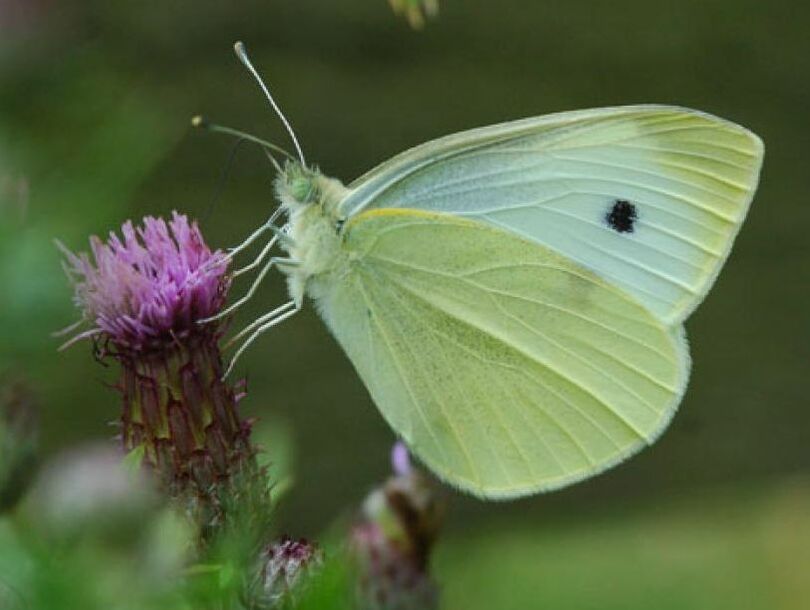
As well as home-bred butterflies, large flocks of Large Whites often arrive from Continental Europe in spring. With up to three broods in a warm summer it soon spreads throughout Britain and Ireland, where it seems to have a special liking for any kind of domesticated CABBAGE. 

Large White caterpillars may make short work of garden cabbages, but the butterflies are so desirable that even if we don't grow cabbages to eat ourselves its worth growing them just for them. 
Nasturtiums can be used as an alternative. Though not closely related to cabbages, they produce similar chemical signals encouraging the females to lay their eggs on them.

The Small White will eat either wild crucifers like GARLIC MUSTARD and CHARLOCK or cultivated members of the cabbage family, whichever is available.

The final broods of the Large and Small Whites overwinter as chrysalises.

The other whites and yellows seem to prefer wild crucifers to garden varieties.
Picture

 GREEN-VEINED WHITE
Pieris napi

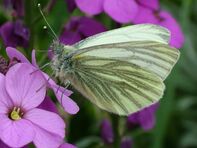
Common in damp pasture and woodland throughout Britain and Ireland, the female lays her eggs singly on young fresh plants of LADY'S SMOCK (Cuckoo Flower) or  GARLIC MUSTARD, as well as HEDGE MUSTARD and WATER CRESS.

They usually have two broods in a year, the second brood hibernating as chrysalises.
Picture

ORANGE-TIP
Anthocaris cardamines

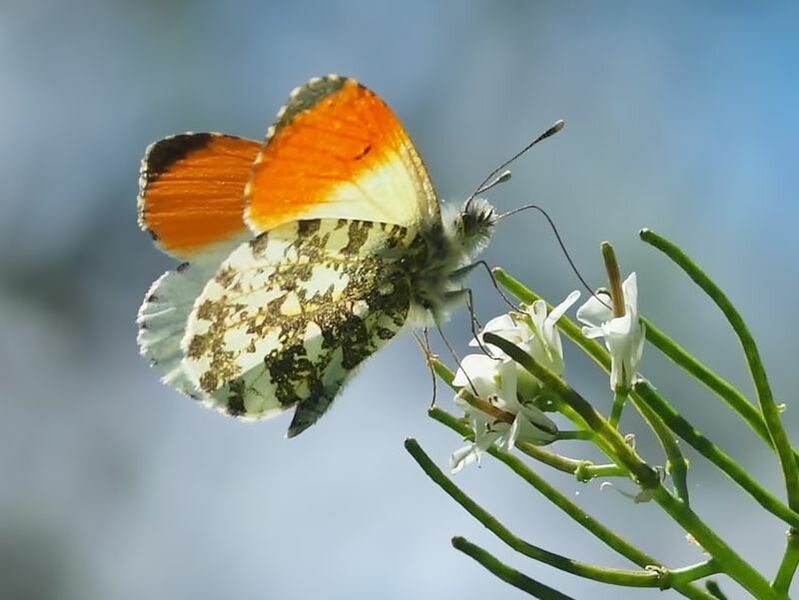
Its name reflecting the vivid orange colour at the tips of the wings in males, the Orange-tip is often the first butterfly to emerge in spring, excluding the few that like the Peacock and Small Tortoiseshell hibernate as adults.

The Orange-tip lives in colonies in loose hedgerows and woodland edges. The female lacks the prominent orange wing tips of the male, and when in flight could easily be mistaken for other whites, although the underwings visible when the butterfly is resting with its wings held vertical are much more intricately patterned. 

The females lay their eggs, just one per bud on crucifers like GARLIC MUSTARD and LADY'S SMOCK growing in a sunny spot, usually against a loose hedge.

The emerging offspring eat the seed pods with their seeds.

There is usually only one brood per year, the caterpillars taking early retirement at the end of summer and hibernating as chrysalises on a plant stem. So long as they escape predators and the dreaded strimmer, they emerge as butterflies the following spring.

Orange tips occur in small colonies over much of Britain and Ireland.
Picture

BRIMSTONE
Gonopteryx rhamni

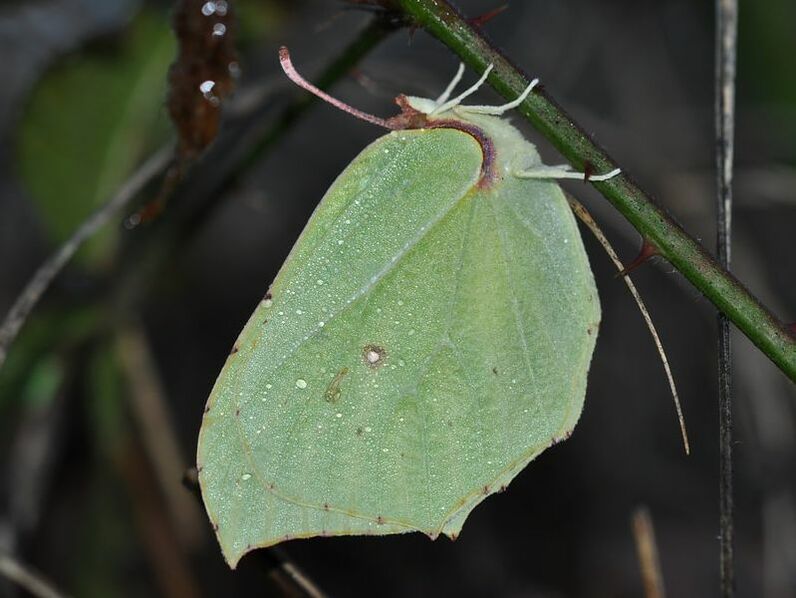
The Brimstone above is well-camouflaged as a leaf as it rests with its wings closed against the foliage.

The caterpillar has a very different diet from that of the related Whites, shunning crucifers in favour of fresh Buckthorn leaves.

The female lays her eggs on PURGING BUCKTHORN on calcareous soils and ALDER BUCKTHORN on acid soils.

Just planting two or three of these bushes may be enough to attract them to breed in your garden if you live in the lower two thirds of England where it is common. It is less common in Wales and Ireland and rare in Scotland. 

Camouflage ability is not confined to the adult; the green colour of the caterpillar also blends in with the leaves of its foodplant while the green chrysalis does a good imitation of a rolled up leaf.

It overwinters as an adult under the leaves of Holly, Ivy or Bramble.

Undisturbed overwintering sites like these are vital for all butterflies and insects in general.
GROW GARLIC MUSTARD LIKE THAT BELOW OR LADY'S SMOCK, EVEN CABBAGES, TO SUPPORT THE WHITES AND YELLOWS.
Proudly powered by Weebly